How to become an allied health assistant

Most people walking through a hospital corridor may pass by without realising the role an allied health assistant plays in helping an elderly man practice walking again after his stroke. They assume it’s a nurse providing routine care, but allied health assistants are often the ones carrying out much of the treatment plan. Physiotherapists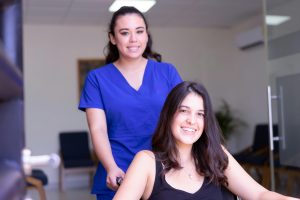 develop exercise plans, and allied health professionals play an important role in supporting patients as they practise those movements regularly.
Healthcare providers are eager for people who can do this work. And Australia’s care and support sector has 3,750 positions sitting vacant right now, with projections showing tens of thousands more workers needed just to support NDIS participants. These shortages are unlikely to go away any time soon. That’s why getting your Certificate III Allied Health Assistance now means you’ll walk straight into stable employment.
What is an allied health assistant?
Allied health assistants work under the supervision of registered health professionals like physiotherapists and occupational therapists to deliver hands-on patient care and support treatment plans. They spend more face-to-face time with patients than almost anyone else on the healthcare team, supporting professionals in almost any speciality. They might be supporting physiotherapy patients recovering from surgery one week, then helping occupational therapy clients adapt their homes for accessibility the next.
And this career matters more than ever. Healthcare systems around the world have strong demand for staff, with a Deloitte study finding that over 80% of healthcare executives expect continued hiring challenges with a gap in supply.The World Health Organization expects a shortfall of 11 million healthcare workers by 2030. That’s why Australian hospitals and clinics are expanding allied health assistant roles to help ensure patients receive the contact time their treatments require.
Allied health assistant duties and responsibilities
Their daily work is all about supporting patients whilst taking direction from qualified health professionals. Specific tasks vary depending on the department, but these responsibilities show up consistently across most allied health settings:
- Patient mobility support: Allied health assistants help people move safely between beds, chairs and treatment areas whilst monitoring physical responses to activity.
- Rehabilitation exercises: A big chunk of their daily work is guiding patients through prescribed movements and tracking progress over multiple sessions.
- Equipment preparation: Treatment rooms need to be set up for patient appointments, including cleaning devices and checking that everything works.
- Hygiene assistance: They help patients who struggle with showering or using the bathroom whilst preserving their dignity throughout the process.
- Vital signs monitoring: They check blood pressure, temperature and pulse rates and document everything.
- Administrative support: Allied health assistants help update patient records and communicate progress to the broader healthcare team.
- Emotional support: Patients sometimes need someone to listen to their concerns and fears beyond the physical care being delivered.
Difference between a nurse and an allied health assistant
Nurses have independent clinical responsibility, whilst allied health assistants work under direct supervision of qualified health professionals. The difference determines what decisions can be made independently versus what requires approvals from someone with higher qualifications.
These are the biggest differences between a nurse and an allied health assistant:
| Aspect | Allied health assistant | Nurse |
| Scope of practice | They support treatment plans created by physiotherapists, occupational therapists and speech pathologists under constant supervision. | They assess patient conditions independently, administer medications and make clinical decisions about care priorities. |
| Training required | Certificate III Allied Health Assistance or Certificate IV in Allied Health Assistance | Bachelor of Nursing degree requiring three years of full-time study plus clinical placements |
| Patient interaction | They help patients complete prescribed exercises and activities | They develop care plans, perform medical procedures and adjust treatment based on patient responses |
| Medication responsibilities | Cannot administer any medications or perform invasive procedures | They can administer medication and manage IV lines |
| Work independence | Always work under the supervision of a registered health professional | Work autonomously within their scope of practice |
Why allied health assistants are in high demand in Australia
Australia’s population is greying faster than the healthcare system can adapt. Right now, people aged 65 and over make up about 17% of the population, but that figure will jump to roughly 22% by 2050. Older Australians need ongoing rehabilitation after falls, speech therapy following strokes and occupational therapy to maintain independence at home.
The rising prevalence of chronic disease adds complexity to patient care.More than one in five Australians now live with multiple chronic conditions such as diabetes and heart disease. Among those with at least one chronic condition, nearly half manage two or more health issues that require coordinated care across different specialists. Allied health assistants play an important role in helping patients follow through on physiotherapy exercises while also supporting their occupational therapy goals.
Workforce shortages also continue across much of the health sector. Jobs and Skills Australia reported that four out of five health occupations faced shortages in 2023. In response, the number of allied health professionals grew by 67% between 2013 and 2022, outpacing growth among medical practitioners (41%) and nurses (26%.)
Demand is exploding faster than universities can graduate qualified therapists, which is why hospitals and clinics are expanding their allied health assistant workforce. These roles let one physiotherapist effectively treat more patients by delegating supervised exercise sessions to trained assistants who can deliver quality care without a university degree.
What are the allied health assistant qualifications in Australia?
You can become an allied health assistant with either a Certificate III Allied Health Assistance or Certificate IV in Allied Health Assistance. Both courses are offered fully online through the Institute of Allied Health, which means you can study around your current commitments without attending a physical campus.
Certificate III Allied Health Assistance
The HLT33021 Certificate III Allied Health Assistance takes 12 months of full-time study and teaches you how to assist allied health professionals across aged care, disability support, hospital and community health settings. This course covers:
- Infection prevention and control protocols
- Workplace health and safety procedures
- Interpreting and applying medical terminology
- Implementing treatment plans under professional supervision
- Required 120-hour work placement in a real healthcare environment
- First Aid certification
Certificate IV in Allied Health Assistance
The HLT43021 Certificate IV in Allied Health Assistance takes 12 to 18 months and is a step up from the Certificate III. With this qualification, you’ll learn how to:
- Conduct group therapy sessions with multiple patients
- Work more independently within allied health teams
- Take on greater responsibility in patient care delivery
- Assist with complex treatment programmes across different specialities
Can you be an allied health assistant without certification?
Potentially, some entry-level positions might hire you without formal qualifications if you have relevant healthcare experience. However, most reputable hospitals and aged care facilities will require at least a Certificate III because it proves you understand infection control protocols, patient safety procedures and how to work within allied health teams.
How to become an allied health assistant in Australia
You don’t need to spend years at a university or have extensive healthcare experience to get started in allied health. The pathway from complete beginner to employed allied health assistant takes roughly 12 months if you’re studying full-time. Most people start with a Certificate III whilst working in aged care or disability support to gain relevant experience, then progress into more specialised roles. This is how to become an allied health assistant in Australia:
1. Discover what being an allied health assistant is really like
Spending time around places where allied health assistants work before enrolling in any course will help you to understand the role and ensure it aligns with your expectations . Healthcare can be depicted as a glamorous career on television, but the reality involves bodily fluids, vulnerable patients and emotionally draining days. It is vital that you understand the demands of the role before committing to a qualification.
Try these strategies to get a real sense of what the work is like:
- Ask to shadow an allied health assistant for a day through volunteer programmes at local hospitals or aged care facilities.
- Join online communities like the Allied Health Professionals Australia Facebook group or browse the Healthcare Subreddit.
- Speak with current allied health assistants about what they wish they’d known before starting.
- Volunteer with disability support organisations or community health programmes to test your comfort level with hands-on patient care.
- Watch day-in-the-life videos from allied health assistants on YouTube.
2. Find the right training to launch your career
The Certificate III Allied Health Assistance through the Institute of Allied Health gives you everything you need to start working in hospitals and aged care facilities. The 12-month online course lets you study around your current responsibilities without having to quit your job. You’ll complete theoretical units to learn the basics of medicine and then complete a 120-hour course placement where you’ll practice what you learned under supervision.
3. Get your first job in healthcare
Most allied health assistant positions require the Certificate III as a minimum qualification, but landing your first role involves more than just completing the course. This is what you’ll want to do to get your first job in healthcare:
- Complete your work placement strategically: Treat your mandatory 120 hours as an extended job interview by showing initiative and building relationships with supervising practitioners.
- Target growing healthcare sectors: Aged care facilities and disability support services are hiring allied health assistants constantly, making them easier entry points than competitive hospital positions.
- Highlight transferable skills: Previous experience in customer service or childcare demonstrates communication abilities that healthcare employers love.
- Apply before you’ve finished studying: Many employers will hire students who are close to completing their Certificate III, so start applying for jobs a few weeks before graduation.
4. Keep learning and move up in allied health
The Certificate IV in Allied Health Assistance is your way into more autonomous roles where you can conduct group therapy sessions and take on more complicated cases with less direct supervision. Having a Certificate IV can boost your allied health assistant salary by $10,000 to $15,000 and make it way easier for you to land more senior assistant roles. Some allied health assistants use their experience as a springboard into registered health professions like physiotherapy or occupational therapy after seeing which specialisation suits their interests.
Allied health assistant salary: how much can you make in Australia?
Money talks, so let’s get specific about what you can expect from an allied health assistant salary in Australia. SEEK data shows that the average allied health assistant salaries range from $65,000 to $75,000 on average, but there’s a huge variation based on qualifications and experience. Someone starting without any formal certificate will make much less than an assistant with a Certificate IV and three years of specialised experience.
The pay structure in NSW Health shows exactly how your qualifications turn into dollars:
| Classification | Year | No qualifications | Certificate III | Certificate IV |
| Technical Assistant
Grade 1- Therapy Aide |
1 | AHA level 1 – Entry | AHA Level 2 – 1st year | AHA level 3 – 1st year |
| 2 | AHA level 2 – 1st year | AHA Level 2 – 1st year | AHA level 3 – 1st year | |
| 3 | AHA level 2 – 2nd
year |
AHA level 2 – 2nd year | AHA level 3 – 1st year | |
| Diversional
Therapist Without Diploma |
1 | AHA level 1 – Entry | AHA level 2 – 1st year | AHA level 3 – 1st year |
| 2 | AHA level 2 – 1st year | AHA level 2 – 1st year | AHA level 3 – 1st year | |
| 3 | AHA level 2 – 2nd
year |
AHA level 2 – 2nd year | AHA level 3 – 1st year | |
| Technical Assistant
(Orthotic Prosthetic) Level 1 |
1 | AHA level 1 – Entry | AHA Level 2 – 1st year | AHA level 3 – 1st year |
| 2 | AHA level 2 – 1st year | AHA level 2 – 1st year | AHA level 3 – 1st year | |
| 3 | AHA level 2 – 2nd
year |
AHA level 2 – 2nd year | AHA level 3 – 1st year | |
| Level 2 | 1 | AHA level 3 – 2nd
year |
AHA level 3 – 2nd year | AHA level 3 – 2nd year |
| 2 | AHA level 3 – 3rd year | AHA level 3 – 3rd
year |
AHA level 3 – 3rd year | |
| 3 | AHA level 3 – 3rd year | AHA level 3 – 3rd
year |
AHA level 3 – 3rd year |
These pay scales hold up because Australia keeps pouring money into healthcare. The government spent $252.5 billion on health in 2022 to 2023, working out to almost $10,000 per person and nearly 10% of the entire economy. That massive investment gives all allied health assistants plenty of job security and regular pay increases built into award structures..
Your earnings also depend on more factors than just years of experience and the certificates you hold:
- Workplace setting: Public hospitals generally pay more than private aged care facilities, though private sector positions sometimes come with better work-life balance.
- Shifts worked: Evening, night and weekend work come with penalty rates that can add $5,000 to $10,000 per year compared to standard Monday-through-Friday shifts.
- Specialisation: Paediatric rehabilitation or mental health support roles command premium rates because fewer assistants have training in these areas.
- Location: Regional positions usually include retention bonuses, subsidised accommodation or extra leave to convince workers away from major cities.
- Casual versus permanent employment: Casual workers earn more per hour but sacrifice job security and paid leave benefits.
Assistant in allied health FAQs
Is allied health a good career?
Allied health is a good career that comes with strong job security as healthcare is growing faster than most industries. You’ll earn competitive salaries between $65,000 and $75,000 per year whilst making a real difference in patients’ lives by helping them in their rehabilitation process.
What is the highest-paid allied health job?
Registered physiotherapists, occupational therapists and speech pathologists earn the most in allied health with salary ranges between $85,000 and $100,000.
What certificate is AIN?
AIN stands for Assistant in Nursing, which requires a Certificate III in Health Services Assistance or Individual Support (Ageing). This is different from allied health assistants who complete the Certificate III Allied Health Assistance and work specifically with therapists rather than nurses.
What is an example of allied health?
Physiotherapy, occupational therapy, speech pathology, dietetics and podiatry are all allied health professions. Allied health assistants support these practitioners by helping patients complete exercises, preparing treatment areas and monitoring progress during rehabilitation sessions.
How long does it take to become an allied health assistant?
The Certificate III Allied Health Assistance takes 12 months of full-time study or longer if studying part-time around work commitments. The course includes theoretical units plus a mandatory 120-hour work placement in a real healthcare setting.
Why is it called allied health?
The term refers to professionals who ally themselves with doctors and nurses as part of the broader healthcare team. These practitioners specialise in rehabilitation and therapy services that complement medical treatment rather than providing direct medical care like prescribing medications or doing surgeries.
Time to make a difference in healthcare as an allied health assistant
Allied health assistance comes with solid pay, job security and the chance to help people rebuild their lives after injury or illness. A Certificate III Allied Health Assistance takes just 12 months of online study while you keep working in your current field. Hospitals in Australia are hiring assistants faster than training providers can graduate them, proving that demand is certainly there.