How to become a nursing assistant in Australia | AIN salary & pay

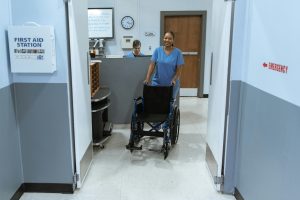 Become a Nursing Assistant and start your healthcare career in just 12 months
Australia’s healthcare system is bursting at the seams and desperately needs more hands-on carers who can support patients with their daily activities. And you might be closer to making a difference than you’d think, as you don’t need a Bachelor’s degree or tons of certifications to break into this field.
A straightforward Certificate III qualification gets you working in hospitals, aged care homes or community health settings where you’ll earn good money whilst helping vulnerable people. Healthcare added 112,000 new jobs in just the past year, so you’ll have plenty of job security protecting your Nursing Assistant salary as you graduate from your Certificate III and enter the workforce.
This guide shows you how to become a certified Nursing Assistant in Australia and why AIPC’s online, self-paced course is your best choice to get there.
What is a Nursing Assistant?
Nursing Assistants work directly with patients in hospitals, aged care facilities and community health centres across Australia. They’re the backbone of patient care in Australian healthcare facilities. They help people who can’t manage certain tasks on their own anymore, like getting dressed in the morning or staying steady on their feet.
Unlike other healthcare careers in Australia, you don’t need to spend years at a university before you can start making a difference. Nursing Assistants usually train for 12 to 18 months before stepping into paid roles, which makes healthcare accessible to anyone with genuine compassion and a willingness to learn practical skills.
What are the nursing assistant duties and responsibilities?
Every shift as a Nursing Assistant comes with brand-new challenges because you’re working with real people who have unique needs. The common thread is that you’re always supporting people when they need it most. Here’s what Nursing Assistants do on a regular shift:
- Direct patient care: You’ll assist with showers, getting dressed and personal hygiene needs that patients can’t manage alone.
- Meal support: You’ll serve food and help patients who struggle to feed themselves whilst tracking how much they actually eat and drink.
- Health monitoring: You’ll record temperature, heart rate, blood pressure and oxygen levels at regular intervals throughout your shift.
- Mobility assistance: Helping people walk around the facility or simply sit up on their beds is a big part of being a Nursing Assistant in Australia.
- Clinical support: Help Registered Nurses during examinations and procedures any time they need extra hands.
What is the difference Between a Nurse and a Nursing Assistant?
Registered Nurses complete university degrees and can administer medications and make clinical decisions, whilst Nursing Assistants train through shorter certificate courses and focus on hands-on patient care. Both roles are incredibly important, they just have different responsibilities based on how much training each person has completed.
Training time creates the biggest split between the roles. Registered Nurses spend three or four years at university studying things like pharmacology and advanced anatomy before they can work on their own. Nursing Assistants, on the other hand, train for only 12 months and focus on practical patient care skills without all the heavy medical theory.
What you’re allowed to do with patients flows directly from that education gap. Registered Nurses have the skills and qualifications to prescribe pills, insert IV lines and decide on the best treatment path for patients. Nursing Assistants help them carry out the treatments by taking vital signs and helping everyone stay safe and comfortable. Here are the biggest differences:
| Aspect | Registered Nurse | Nursing Assistant |
| Training | Bachelor degree | Certificate III/IV |
| Duties | Medications, care plans, clinical decisions | Personal care, vital signs, comfort |
| Autonomy | Independent practice | Works under supervision |
| Median salary | $80,000 | $57,000 |
*Data sourced from Payscale
Why are Nursing Assistants in high demand in Australia?
Healthcare facilities across the country are scrambling to find enough qualified people to care for patients and Nursing Assistants sit right at the centre of this staffing crisis. Employment in this field is growing at 6.8% annually, which puts it among the fastest-growing careers you’ll find anywhere in the Australian job market.
This isn’t just a temporary spike, either. The forces driving this demand are locked in for decades based on how our population is changing and how our healthcare system operates. Here’s why becoming an Assistant in Nursing (AIN) is and will continue to be a great career:
- Our ageing population needs more carers every year: The number of Australians aged 65 and older is set to jump from 4.31 million to 6.66 million by 2041. That’s millions more people who’ll need help with showering, eating and getting around safely.
- Registered Nurses are in critically short supply: Australia faces a shortfall of roughly 79,000 nurses by 2035 to meet projected demand. Healthcare facilities simply can’t hire enough Registered Nurses to fill all their roles, which means they’re leaning more heavily on Nursing Assistants to care for their patients.
- Nursing Assistants are already the backbone of aged care: Personal care workers like Nursing Assistants and Patient Care Aides make up 78% of the direct aged care workforce right now, compared to just 12% for Registered Nurses. That show how much the system already depends on these roles to look after vulnerable people day in and day out.
- Healthcare employs more people than any other sector: About 16.2% of all Australian workers have their main job in health care and social assistance. Even with this massive workforce, facilities still can’t find enough qualified careers, which guarantees strong job security for anyone looking to become a Nursing Assistant.
What are the Nursing Assistant qualifications in Australia?
You’ll need a Certificate III in Health Services Assistance to become a Nursing Assistant in Australia. This certification trains you in everything you need to know to hit the ground running, like patient hygiene and workplace safety protocols. This nationally recognised qualification only takes 12 months of full-time study and prepares you to work in hospitals, aged care homes and community health centres across the country.
The Australian Institute of Professional Counsellors delivers this certificate entirely online with self-paced learning, so you can fit your studies around existing commitments. You’ll learn about patient fundamentals, infection control procedures, communication techniques and how to assist Registered Nurses during medical procedures. The course includes practical placements where you’ll work with real patients under supervision to build your confidence before you get your first job.
There are a few paths you can take when deciding how to become a Nursing Assistant in Australia, each with its own pros and cons. These are the most popular pathways:
| Qualification pathway | Duration | Entry requirements | Study mode | Best for |
| Certificate III in Health Services Assistance | 12 months full-time | Year 10 completion or three years life experience | Online, self-paced through AIPC | Anyone wanting to work in hospitals or acute care settings |
| Certificate III in Individual Support (Ageing) | 12–18 months | Year 10 or equivalent life experience | Online, self-paced through SOE | People focused specifically on aged care facilities |
| Certificate III in Individual Support (Disability) | 12–18 months | Year 10 or equivalent life experience | Online, self-paced through SOE | Those wanting to support people with disabilities in community centres |
| On-the-job training (no formal qualification) | Varies by employer | Employer-specific requirements | Workplace-based | Limited to some aged care facilities |
Can you be a Nursing Assistant without certification?
Some aged care facilities will hire you without formal qualifications and train you on the job, but this approach seriously limits where you can work and how much you’ll earn. Hospitals almost never consider uncertified candidates because they need workers who already know how to handle infections and care for patients in critical conditions.
Working without your Certificate III also caps your earning potential and blocks career progression paths. Qualified Nursing Assistants earn more than untrained workers and you’ll need that certificate anyway if you ever want to advance to Enrolled Nurse or specialise in areas like wound care or dementia support.
How do you become an AIN in Australia?
You don’t have to deal with years of study or mountains of prequalifications to become an Assistant in Nursing in Australia. You can go from complete newcomer to gainfully employed healthcare worker in just 12 months by following a straightforward path that thousands of Australians take every year.
1. Discover what being an AIN is really like
Jumping into a new career without understanding the daily reality is a recipe for disappointment and wasted money. Spend time learning what Nursing Assistants actually do during their shifts before you commit to training because the job comes with physical demands and emotional challenges that course brochures don’t really do a good job at explaining properly.
Here’s how to get a good sense of the Nursing Assistant duties and responsibilities:
- Chat with people already doing the job: Find Nursing Assistants through your local aged care facility or hospital and ask them about their typical day, what they love about the work and what frustrates them the most. Real workers will give you the unfiltered truth.
- Arrange a workplace visit or shadow shift: Many healthcare facilities let prospective workers tour their wards or spend a few hours observing staff. Seeing real patient care shows you whether you can handle all the bodily fluids and physical demands.
- Consider which setting appeals to you most: Aged care facilities move at a steadier pace where you’ll build ongoing relationships with residents. Hospitals throw you into fast-moving clinical environments with acutely ill patients, whilst community care sends you into people’s homes for one-on-one support.
2. Find the right training to launch your career
You should spend some time considering your qualification options because different certificates prepare you for different healthcare settings. The Certificate III in Health Services Assistance suits anyone targeting hospital work, whilst a Certificate III in Individual Support works better for aged care.
Your training options to become a Nurse Aide break down like this:
- Full-time study gets you qualified fastest: You’ll finish your Certificate III in roughly 12 months so you can start earning sooner.
- Part-time study lets you keep some income as you study: Stretching your qualification over 18–24 months lets you keep a part-time or even full-time job whilst you get certified.
- Online learning through AIPC for maximum flexibility: Our online courses are fully self-paced, so you can study on weekends, evenings, early mornings or even on public transit on the way to your current job.
- Practical placements are still incredibly important: Every pathway includes supervised shifts in real healthcare facilities where you’ll practice what you’ve learned.
3. Get your first job in healthcare
Most Nursing Assistants start with casual positions that let them test different environments before committing to permanent roles. It’s always a good idea to start applying during your final months of study because many employers hire students about to earn their qualifications. These are some good entry-level Nursing Assistant roles in Australia:
| Entry position | Advantages | Drawbacks | Best for |
| Casual aged care | Always hiring, flexible scheduling | Unpredictable income, fewer benefits | People wanting flexibility around other responsibilities |
| Hospital support | Better career progression, clinical exposure | Competitive hiring, demanding environment | Workers looking for long-term advancement |
| Permanent aged care | Stable income, consistent roster | Less flexibility, potentially monotonous | Those wanting predictable schedules |
| Community care | One-on-one interaction, variety | Vehicle required, travel unpaid | Independent workers who enjoy driving |
4. Keep learning and move up in nursing
Your Nursing Assistant qualification opens doors to further training that can drastically increase your earning potential. More than half of people who finished vocational training reported improved employment outcomes afterwards, including better job prospects and work benefits. These are the best pathways forward after becoming a certified Nursing Assistant:
| Career advancement | Time needed | Salary boost | Why pursue this |
| Certificate IV in Allied Health Assistance | 12–18 months part-time | $5,000–$10,000 yearly | Work in specialised clinical areas with greater responsibilities |
| Diploma of Nursing | 18–24 months part-time | $15,000–$25,000 yearly | Major step up in clinical autonomy and professional recognition |
| Specialised dementia care training | 3–6 months | $3,000–$8,000 yearly | Highly valuable in aged care settings |
| Bachelor of Nursing | 3 years full-time | $25,000–$40,000 yearly | Complete transformation into fully qualified independent practitioner |
Nursing Assistant salary: How much do AINs make in Australia?
Nursing Assistants in Australia earn a median weekly wage of $1,279, which works out to roughly $66,508 per year. Most Nursing Assistants earn between $25 and $35 an hour when they’re starting out, with plenty of room to boost that figure through smart choices about when and where you work.
Your actual take-home pay varies quite a bit depending on a few factors like:
- Your workplace changes everything: Hospitals generally pay better than aged care facilities because you’re dealing with sick patients and more intense clinical work. Community care positions usually fall somewhere in the middle, whilst disability support services run their own pay structures based on how complex your clients’ needs are.
- Night and weekend shifts pump up your income fast: Evening work, weekend shifts and public holidays all attract penalty rates that can slap an extra 50% onto your regular hourly rate. Pick up a few night shifts each fortnight or volunteer to work on public holidays and you’ll add thousands to your yearly earnings without even having to negotiate a pay raise.
- Specialised skills are worth it: Get good at dementia care, wound management or supporting medically delicate patients and you’ll earn noticeably more than Nursing Assistants doing basic personal care. A few years building expertise in tricky areas makes you valuable enough to command premium wages.
- Casual versus permanent employment: Permanent jobs include paid holidays, sick days and super contributions that causal workers don’t get. Casual rates run about 25% higher per hour to make up for missing those benefits, but your shifts might dry up now and then.
Assistant in Nursing FAQs
Can an RN work as an AIN in Australia?
Yes, Registered Nurses can work as Nursing Assistants, though most don’t because it means lower pay and reduced responsibilities. Some RNs may pick up casual AIN shifts for extra income or whilst transitioning between nursing roles, but it’s not the norm.
What is a Nursing Assistant called in Australia?
Nursing Assistant and Assistant in Nursing (AIN for short) are the most common terms used interchangeably across Australia. Some facilities also use Nurse Aide or Patient Care Aide to describe the exact same role with identical responsibilities and qualifications.
What certificate is AIN?
You need a Certificate III in Health Services Assistance to work as an AIN in Australia. This nationally recognised qualification takes about 12 months of full-time study to complete.
Can I work as an AIN while studying nursing?
Yes, you can work as an AIN whilst you study your nursing qualification. Many nursing students work as Nursing Assistants whilst completing their degrees because the hands-on patient care experience strengthens their clinical skills and helps pay for university fees at the same time.
How long does it take to become a nursing assistant?
It usually takes 12 months of full-time study to complete a Certificate III and become qualified. Part-time students usually finish within 18 to 24 months depending on their schedule.
What is the highest salary for a Nursing Assistant?
The top 25% of Nursing Assistant earners take home $74,000 per year or more, which means that there is quite a bit of room to grow your income beyond the median salary of $57,000.
Are nursing assistants and CNAs the same?
No nursing assistants and CNAs aren’t the same. CNA stands for Certified Nursing Assistant, which is American terminology. Australian Nursing Assistants do similar work but train under different healthcare regulations and certification standards specific to our healthcare system.
Australia’s patients are waiting for a Nursing Assistant like you
Healthcare facilities across the country desperately need compassionate people who genuinely care about helping vulnerable patients through difficult moments. Becoming a Nursing Assistant in Australia puts you exactly where you can make the biggest difference whilst building a secure career in one of the country’s fastest-growing industries.
Stop waiting for the perfect moment to take the next step. Explore our Certificate III in Health Services Assistance and see how AIPC can help you get to your next career goal faster.